
Create Your Own Anime Character A Creator's Guide
Want to create your own anime character? Our guide walks you through using AI tools to design and bring your unique anime avatar to life with ease.
Have you ever imagined yourself as the hero of your own anime? What if you could take that character out of your head and into the digital world? It's now easier than ever to create a unique, personalized anime character, and you don't need any complex software or drawing skills to do it.
This guide is your complete roadmap. We'll go from a simple idea to a fully-realized anime persona that's consistent, shareable, and ready for anything.
Your Dream Anime Character Awaits
Ever wanted a custom avatar for your Twitch stream, a profile picture that actually looks like you (but, you know, cooler), or maybe a super-unique gift for a fellow anime fan? That's the creative spark we're talking about. What once took years of artistic training or pricey commissions is now something anyone can do.
I'll walk you through the entire process, starting with just an idea and a handful of your favorite photos. By the time we're done, you won't just have one cool image. You'll have a versatile and expressive anime version of yourself that you can use across all your digital adventures.
From Concept to Creation
The journey is surprisingly straightforward and incredibly rewarding. It really boils down to a few key phases. While we'll dive deep into each one, it helps to see the big picture first. Think of it as giving the AI the right ingredients to cook up something magical.
This little infographic breaks down the core workflow perfectly.
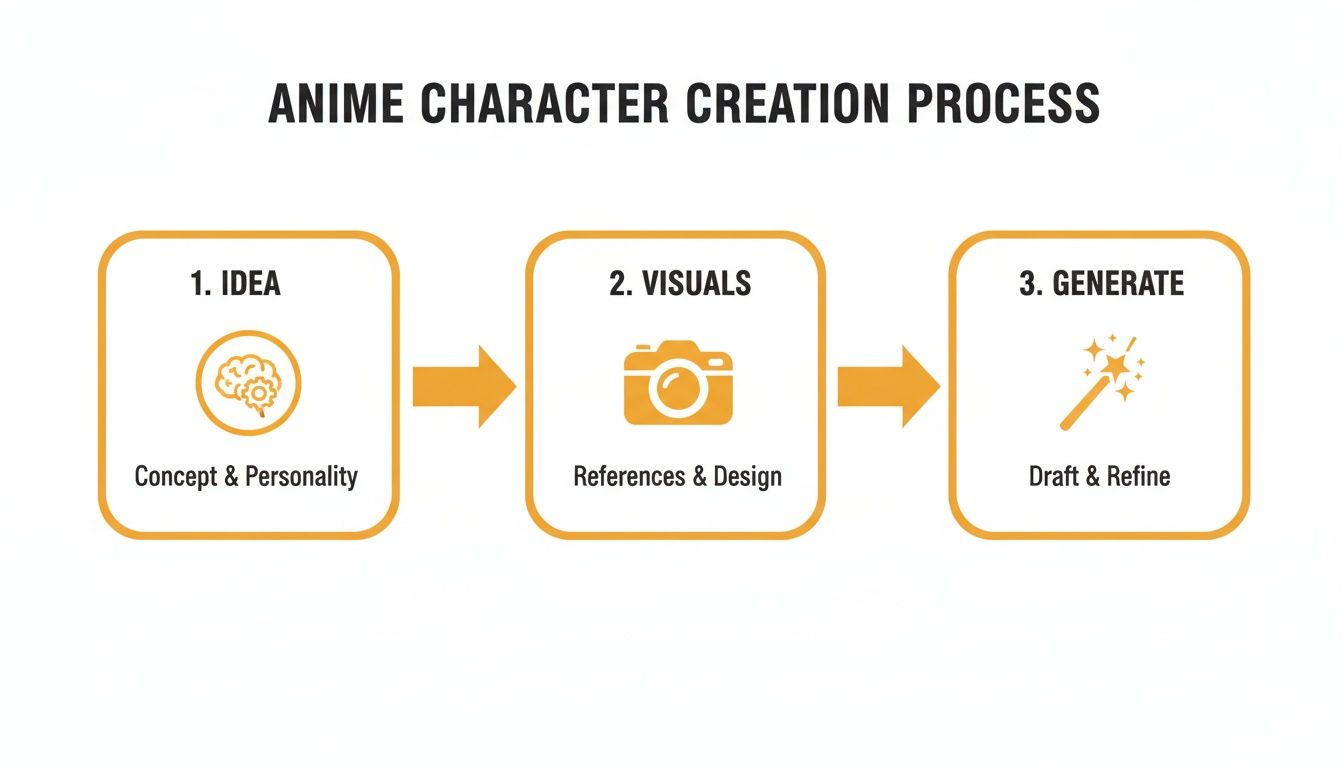
It all starts with a clear idea and good reference photos. Get those right, and you're empowering the AI to generate a character that looks consistent every single time. It's less about technical know-how and more about thoughtful preparation.
Why Is Everyone Making Anime Avatars?
The explosion of interest in anime is more than just a passing trend; it's a full-blown global cultural phenomenon. And all that demand is fueling some incredible new creative tools.
The global anime market is projected to hit an eye-watering USD 48.47 billion by 2030, mostly thanks to streaming platforms and our growing hunger for personalized content. If you're curious, you can read the full research on the anime market's impressive growth to see just how massive this world has become.
This created the perfect storm for tools that let fans become part of the culture, not just watch from the sidelines. I've seen people use their custom characters for everything:
- Streaming and Content Creation: Building a recognizable brand on platforms like Twitch and YouTube.
- Social Media: Crafting unique profile pictures and emotes that show off their personality.
- Personal Projects: Designing custom gifts, fun family portraits, or even characters for their own stories.
The real magic here is consistency. Modern AI doesn’t just spit out a one-off image. It creates a reusable character model. This means you can generate endless poses, expressions, and scenes while ensuring your character always looks like your character.
Anime Character Creation Methods Compared
Deciding how to bring your anime character to life can feel overwhelming. You could learn to draw, hire a pro, or jump into the world of AI. Here’s a quick rundown of how these options stack up against each other.
| Method | Skill Required | Time Investment | Cost | Best For |
|---|---|---|---|---|
| Traditional Drawing | High (artistic skill) | Very High (months to years) | Low (supplies) to High (courses) | Aspiring artists who want full creative control and to learn a new skill. |
| Hiring an Artist | Low | Medium (finding/briefing artist) | High ($50 - $500+ per piece) | Those with a specific vision and budget who need professional, bespoke artwork. |
| Using an AI Tool | Low | Low (minutes to hours) | Low (free to subscription) | Creators, streamers, and enthusiasts who need a consistent character quickly and affordably. |
Ultimately, there's no "wrong" choice—it just depends on your goals, budget, and how much time you want to invest. For speed and accessibility, AI tools have completely changed the game.
Preparing Your Character Concept and Photos
Before diving into the fun part, a little prep work is key. Trust me, spending a few minutes on this now will save you a ton of headaches later. The AI's ability to create a consistent, awesome character all comes down to two things: a solid character concept and a good set of reference photos.
Think of it this way: you're the director, and the AI is your artist. You need to give it clear instructions.
Nailing Down Your Character Concept
First up, who is your character? Are they a hyper-caffeinated streamer who's always loud and energetic? Or maybe they're a cool, mysterious strategist who rarely cracks a smile? Deciding on a core personality first will guide every choice you make, from their expressions to the art style you pick.
This isn't about writing a novel-length backstory. Just a simple framework will do the trick.
- Core Personality: Jot down 2-3 key traits. Think "brave, cheerful, and a little clumsy."
- Default Mood: What's their go-to emotional state? Are they generally happy, pensive, or grumpy?
- Key Expressions: What are the 3-5 emotions you'll need the most? For a streamer, that might be happy, surprised, shocked, and "concentrating hard on a game."
Having this in mind stops you from just generating random, disconnected images. You're building a character, not just a picture.
Picking the Perfect Reference Photos
Okay, this is where the magic really starts. Your photos are the raw ingredients the AI uses to learn your face. The rule is simple: garbage in, garbage out. You need clear, well-lit photos with simple backgrounds that won't distract the AI.
Pro Tip: I've found that a set of 5-10 high-quality photos is the sweet spot. This gives the AI enough visual data to understand your features from different angles without getting overwhelmed. The goal is to build a flexible model of your face.
This is the kind of variety you should be aiming for.
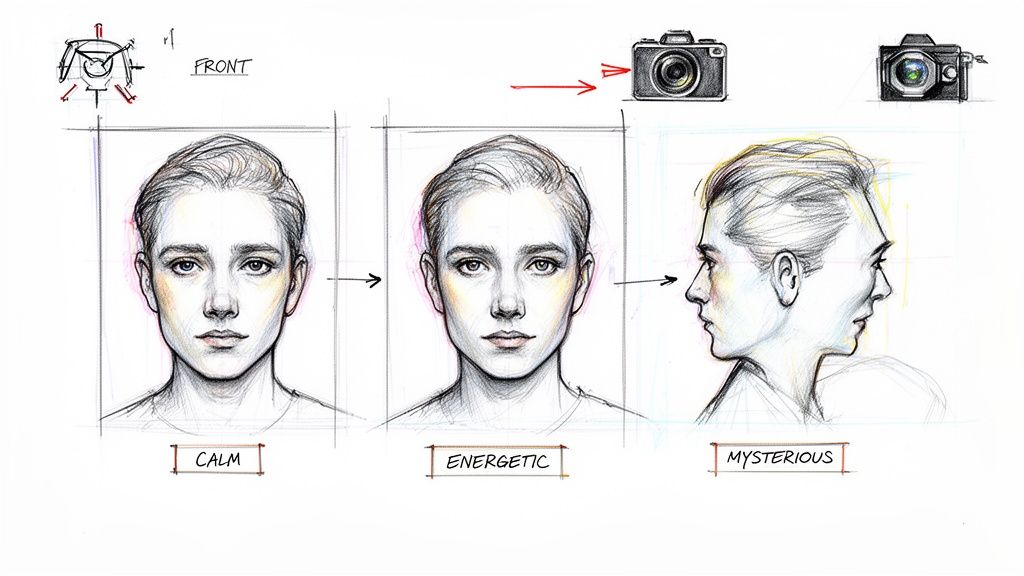
See how it includes shots from the front, a three-quarters view, and the side? That’s exactly what you want. It helps the AI build a 3D understanding of your facial structure.
Make sure nothing is blocking your face—no sunglasses, no hands, no crazy shadows. And don't be afraid to mix up your expressions! A few smiles, a neutral look, and maybe even a frown will give the AI a much better sense of your emotional range. If you want a deeper dive, our guide on choosing photos for an anime filter for photos has even more tips.
Alright, you’ve got your concept sketched out and a handful of solid reference photos. Now comes the fun part—bringing your anime character to life inside the AI. This is where the magic really starts to happen.
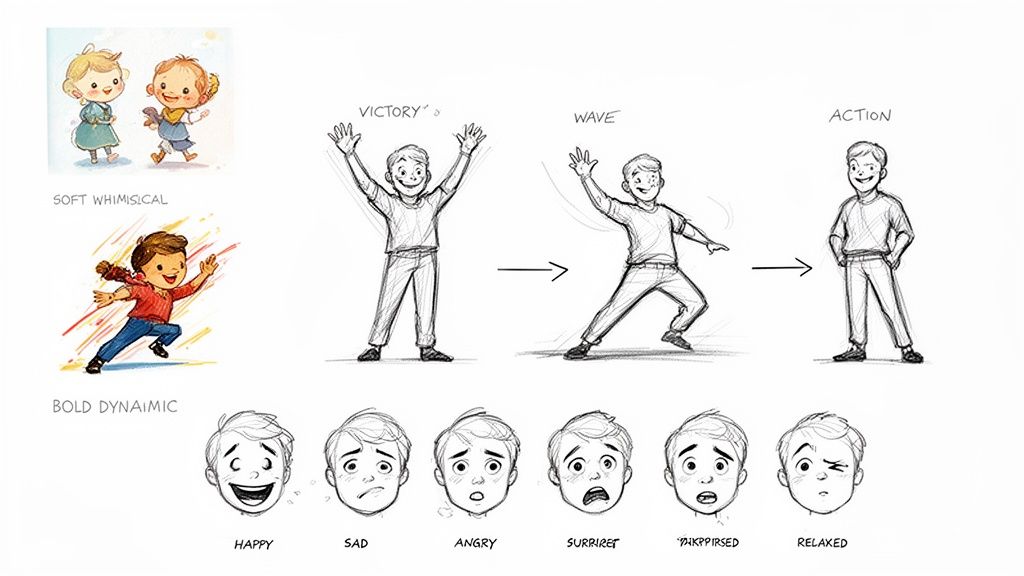
The first big decision you’ll make is picking an art style, and trust me, this choice sets the whole vibe for your character.
Are you picturing something soft and whimsical, like a character straight out of a Studio Ghibli classic? Or maybe you're leaning toward the sharp lines and explosive energy of a modern shonen series. Think about who your character is. A super bubbly, high-energy personality is going to feel right at home in a style with vibrant colors and high contrast. On the other hand, a quiet, mysterious type might be better served by a more painterly, muted look.
It’s incredible how much easier this has gotten. In fact, the market for anime creation software is expected to grab a 22.3% market share by 2025, and a big part of that is driven by AI tools that make professional-level design accessible to everyone. The AI essentially learns artistic patterns, which lets it automate really complex parts of character design. You can discover more insights about the anime market to get a feel for how much these tools are shaking things up.
Building Your Character's Core Library
Once you’ve nailed down a style you love, the real goal is to build out a library of different poses and expressions. This is what turns a single, static picture into a character you can actually use for all sorts of things. Don't stop after generating one perfect portrait—think bigger!
Start by creating a set of core emotions. These are the go-to expressions you’ll come back to again and again.
- Happy: A bright, cheerful smile. This is your default for things like profile pictures or positive reactions.
- Sad: Think a subtle frown or maybe just downcast eyes. Perfect for showing a bit of disappointment.
- Angry: Furrowed brows, a determined look. You’ll need this for when things get intense.
- Surprised: Wide eyes, maybe an open mouth. This one is a classic for reaction images or stream alerts.
The secret here is to generate all these core expressions from the exact same character model. This keeps everything consistent—the eye color, hairstyle, and facial structure will stay the same, even when the emotion changes.
Expanding into Action and Context
With those basics in the bag, you can start getting more creative with action-oriented poses. This is where your character stops being just a drawing and starts to feel like a living, breathing part of your projects. Think about the specific situations where you’ll want to use them.
For instance, if you're a streamer, you might need:
- A victory pose for when you crush it in a game.
- A thoughtful thinking pose with a hand on the chin for those strategic moments.
- A cute wave to say hello to your followers.
If it’s for more personal stuff, you could generate your character holding a coffee mug for a “good morning” post or rocking a Santa hat for a holiday message. Every new pose you create is another tool in your creative arsenal, making your character that much more versatile. If you need some inspiration, check out our guide on finding the perfect cute anime pose reference to get the ideas flowing.
Here we go. That first wave of images from the AI is always exciting, but this is where the real fun begins. Think of those initial generations as your raw clay, not the finished sculpture. The magic happens in the refinement process.
You’ll get into a rhythm: generate, analyze, adjust, repeat. Maybe the AI gave your character brown eyes instead of hazel, or a signature scar is missing. These little misses are totally normal and, more importantly, completely fixable. You just need to learn how to tell the AI exactly what to tweak.
Fine-Tuning Your Prompts and References
Your two biggest levers for steering the AI are your text prompts and your reference photos. If you notice the AI consistently fumbling a specific detail, it's almost always a sign that your initial instructions could be a little clearer. Let's get specific.
- Isolate Key Features: Is the AI messing up your character’s unique eye color? Try uploading a new reference photo that's cropped tightly on just the face. This forces the AI to zero in on your facial structure and features, which can be a game-changer for getting colors and shapes just right.
- Use Negative Prompts: Sometimes, telling the AI what you don't want is more powerful than telling it what you do. If your character keeps showing up with a random hat or glasses, adding a negative prompt like
((no hat))or((no glasses))is a quick and easy fix. - Get Descriptive: Don't just say "red shirt." Is it a "faded crimson t-shirt" or a "brand-new cherry red polo"? The more specific your descriptions, the less room the AI has to guess, helping you nail those crucial stylistic details.
Iteration is everything when you're creating a character. Seriously, don't hesitate to generate ten or twenty versions of the same pose. Each attempt teaches you more about how the AI thinks, turning you into a better creative director for your own project.
Nailing Down Those Pesky Details
One of the trickiest parts of this whole process is keeping your character consistent from one image to the next. You'll get a killer portrait, but then a full-body shot mysteriously changes the logo on their jacket. This is why locking in your character's core design is so important.
Before you go wild creating a huge library of poses and expressions, take the time to perfect one single, neutral "base" image. Get that reference photo looking exactly how you want it—the hair, the eyes, the outfit, everything.
Once it's perfect, use that image as your main reference for every single generation that follows. You're essentially telling the AI, "This. This is the blueprint. Don't deviate." This one step will radically improve your consistency and is the real secret to building a character that looks and feels like yours every single time.
Putting Your New Anime Character to Work
So, you did it! After all that creative energy—the brainstorming, the photo prep, and the fine-tuning—you've got a polished, consistent anime character that’s truly your own. The big question is, what now? It’s time to move beyond the design canvas and unleash your creation into the world.
Think of your character as more than just a cool image. It’s a flexible digital identity ready for branding, self-expression, or just plain fun. Whether you're a streamer, a small business owner, or just looking for a new creative outlet, your anime persona is ready to shine.
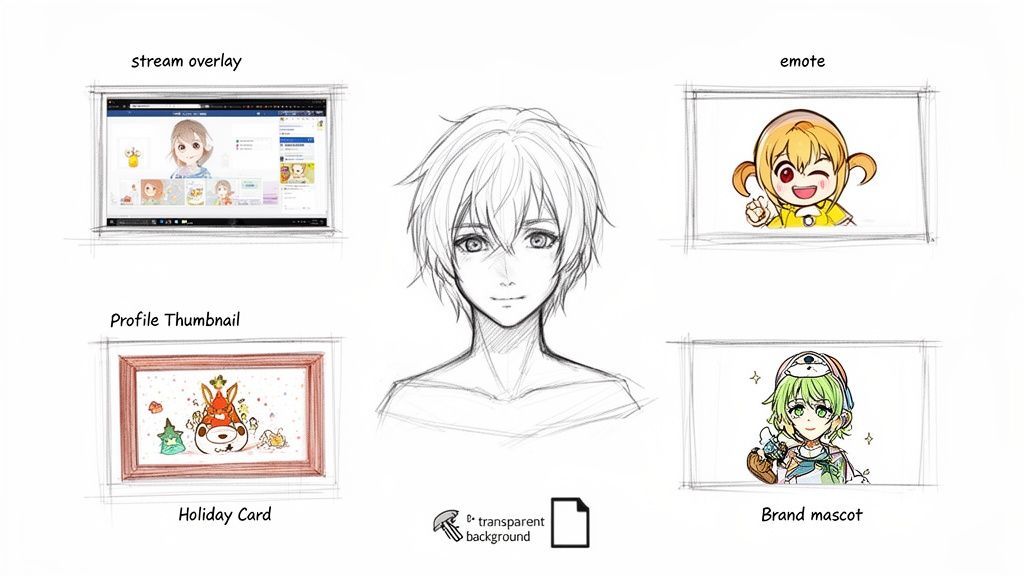
For Content Creators and Streamers
If you're in the content game, a consistent character is priceless. It becomes the face of your channel, the visual signature your audience instantly recognizes across every platform.
- Custom Emotes and Stickers: That expression library you built is an absolute goldmine. Turn those poses into custom Twitch emotes or Discord stickers. A shocked face for a wild gameplay moment or a cute wave for new subscribers adds a personal flair that audiences connect with.
- Standout YouTube Thumbnails: Ditch the generic reaction faces. Placing your own character into your thumbnails creates a unique visual style that’s immediately clickable and helps your videos pop in a crowded feed.
- Cohesive Social Media Brand: Use your character across all your profiles—profile pictures, banner art, and post announcements. A consistent look and feel helps build a much stronger and more memorable online presence.
Fun for Families and Friends
You definitely don't need to be a professional creator to get a ton of mileage out of your character. It’s a fantastic tool for personal projects and heartfelt gifts that are guaranteed to bring a smile.
A custom-designed character is a fantastic way to bring a personal touch to everyday projects. My family used our anime-style portraits to create a custom storybook for my niece, and it was a bigger hit than any store-bought gift.
Just imagine what you could create:
- Personalized Holiday Cards: Instead of the standard family photo, why not an anime-style family portrait for your next holiday card? It's fun, unique, and something your friends will actually keep.
- Custom Storybooks: Cast your kids as the heroes of their very own adventure. It's an incredible way to get their imaginations fired up.
- Unique Gifts: How about printing your character on a mug, t-shirt, or poster? It makes for a truly one-of-a-kind birthday or anniversary present.
Business and Branding Applications
Even in the professional world, a well-designed character can do wonders. A friendly and approachable mascot helps a brand feel more personal and relatable, allowing you to connect with customers on a much more human level.
This is especially true in our digital-first world. With internet distribution growing at a massive 21.2% CAGR, streaming and social media are where your audience spends their time. A custom character gives your brand a personality that thrives in these highly visual spaces. If you want to dive deeper, you can learn more about the anime market's digital shift and see just how big the opportunity is.
You could even take it a step further and turn your character into a VTuber for more dynamic engagement. Our guide on choosing the right VTuber avatar maker can walk you through that process. From marketing materials to explainer videos, a mascot helps your message stick.
Got Questions About Making Your Anime Character?
It's totally normal to have a few questions when you're first diving into the world of AI art. Even with a great tool, there's always a bit of a learning curve. Let's tackle some of the most common things people ask when they start out. Think of this as a little cheat sheet to get you off to a running start.
Getting your reference photos right is absolutely the most critical part of this whole process. It's the blueprint the AI uses to understand who, exactly, you want to bring to life.
How Many Photos Should I Use for a Consistent Character?
You might get away with one amazing photo, but honestly, the sweet spot is somewhere between 5 and 10 high-quality pictures. Think of it like this: you're feeding the AI data, and the more good data you give it, the smarter it gets.
By using a handful of photos from different angles and with a few different expressions, you're giving the AI a much richer, 3D understanding of your face. This is the secret sauce for building a model that looks like you (or your character) every single time, no matter what pose or style you throw at it later.
We're not just making a single image here; we're building a digital puppet you can use over and over. A solid set of reference photos ensures that every time you pull the strings, the character that shows up is instantly recognizable. That consistency is key.
Can I Make a Character That Isn’t Based on Me?
Of course! Using your own photos is a blast for making a personal avatar or a "toon-me" version of yourself, but you are definitely not limited to your own face. The process is super flexible.
You can use all sorts of images as your foundation. For example:
- Stock Photos: Grab a high-quality stock photo of someone who has the vibe you're going for.
- Digital Art: Already have some artwork of an original character? You can absolutely use that as a reference.
- A Friend's Photos: Just make sure you get their permission first! This is an awesome way to create a really thoughtful, personalized gift.
Once you have your base images, you can steer the AI with simple text prompts. Want your character to have "electric blue eyes," "spiky silver hair," or "a small scar over the left eyebrow"? Just tell the AI, and you can build a completely original persona from scratch.
What Can I Do With My New Character?
Oh, this is the fun part! Once you have your character, the possibilities are pretty much endless. You've created a versatile creative asset that you can plug into all sorts of projects.
I've seen streamers and YouTubers use their characters for everything from profile pictures and eye-catching thumbnails to custom Twitch emotes. Families have made incredible personalized storybooks, hilarious holiday cards, and unique portraits. Even small businesses can create a friendly mascot to make their marketing feel more personal and less corporate.
They're perfect for anyone who wants to add a creative spark to their digital life. Whether you're a cosplayer creating stylized versions of your favorite characters or a couple looking for a cute portrait, you'll find a million ways to use your creation.
Ready to stop dreaming and start creating? With Tooncraft, you can bring your perfect anime character to life in minutes. Just upload your photos, choose your favorite style, and let our AI handle the rest. Create your own anime character with Tooncraft today!