
My Hero Academia OC Maker Your Guide to Creating a Unique Hero
Ready to design your own hero? This My Hero Academia OC maker guide walks you through quirks, backstories, and using AI to create stunning character art.
Ever dreamed of creating your own hero and dropping them right into the world of My Hero Academia? It's a blast, and I'm here to show you how to do it. We'll combine some good old-fashioned brainstorming with a seriously cool AI workflow to bring your character to life, from a simple idea to a fully realized hero.
Let's get started.
Your Journey to Creating an MHA Original Character
Making an OC that feels like they genuinely belong at U.A. High is about so much more than just sketching out a cool costume. It’s about building a story. You're crafting a new personality who could stand shoulder-to-shoulder with Deku or trade blows with Bakugo. It's an incredibly fun and personal process, turning you from a fan into a creator.
The spark for a great character doesn't usually start with their Quirk, but with an idea—who are they? What do they want?
The MHA fandom is bursting with creativity. Back around 2020, when the show's popularity just exploded, over 500 different OC and alternate universe communities popped up online. It was a massive wave of creative energy that proved fans were desperate for ways to visualize their own heroes. You can read more about how the fandom took off over at ScreenRant.
From Imagination to Image
This is where the real magic begins: taking that character out of your head and turning them into shareable, anime-style art. The right AI tool is basically the ultimate My Hero Academia OC maker, letting you translate detailed descriptions into visuals that nail the show's unique look. You don't need to be a pro artist; you just need to focus on the story and the details that make your character special.
This process can take a simple idea and turn it into something that looks like it was lifted straight from an episode.
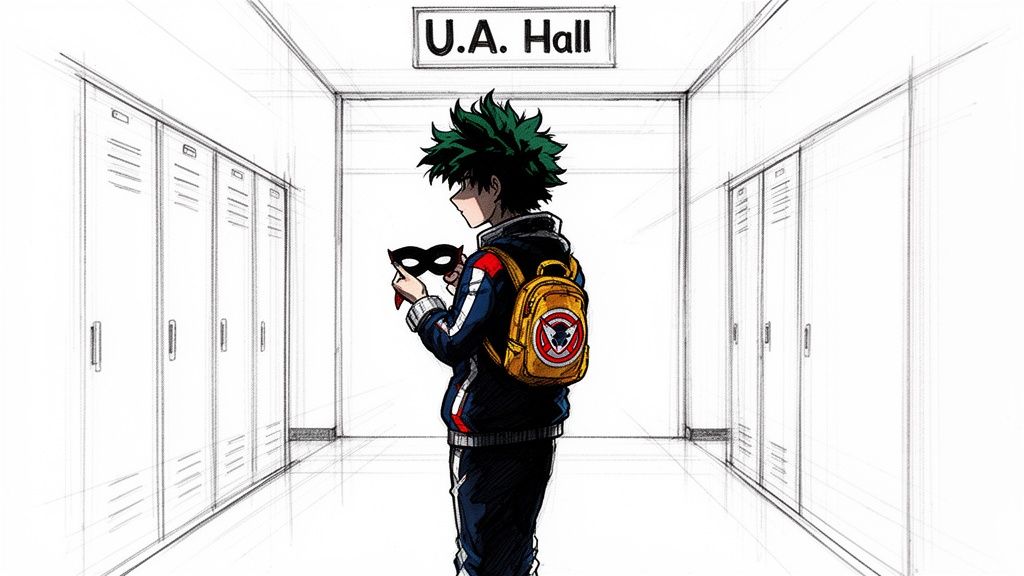
The right tools close the gap between what you can imagine and what you can create. They let you produce high-quality character art that stays consistent, no matter the pose or expression.
Think of this guide as your personal quirk consultant. I'll walk you through building a hero from the ground up and then show you how to generate incredible visuals you can share with the world.
1. Who Is Your Character, Really?
Every unforgettable My Hero Academia OC starts with a person, not a power. Before you jump into designing some mind-blowing Quirk, take a step back and ask a fundamental question: who is this character at their core?
Are they a wide-eyed U.A. freshman desperate to make their mark? Maybe they're a jaded vigilante operating in the city's shadows, or even a villain who genuinely believes their twisted cause is just. This single decision is the bedrock for everything else you'll build.
Nailing Down the Core Concept
Think of this as your character's "source code." Their background, their family life, their biggest triumph, their most painful failure—all of it shapes who they are today. An OC who grew up in the shadow of a famous Pro Hero parent will have a completely different set of problems than one who fought to survive on the streets. One deals with the crushing weight of expectations, while the other is fueled by a burning need to prove they exist.
What's their primary motivation? Is it a classic pursuit of justice? A hunger for fame and recognition? Or is it something deeply personal, like protecting a younger sibling or avenging a past wrong? This central drive is what will guide their choices when everything is on the line. For instance, a character obsessed with redeeming their family’s disgraced name might take reckless chances that others would run from, painting them as either incredibly heroic or dangerously impulsive.
Your OC's backstory isn't just trivia; it's the engine for their story. A single, defining event from their past—whether it's witnessing a heroic sacrifice or suffering a devastating loss—should be the spark that ignited their journey.
To make them feel real, give them personality traits that create a little internal friction. Maybe your character is incredibly kind and empathetic but also possesses a ruthless competitive streak. This kind of inner conflict is what makes a character feel like a living, breathing person instead of a flat caricature.
To get the ball rolling, think about some classic archetypes and how they might fit into the MHA universe. This can be a great starting point for figuring out what makes your character tick.
OC Archetype Inspiration
Use this table to brainstorm the foundational archetype for your My Hero Academia OC.
| Archetype | Core Motivation | Potential Quirks | Example Scenario |
|---|---|---|---|
| The Idealist | To protect everyone and uphold the true meaning of heroism. | Defensive (barriers, force fields), Healing (regeneration), or supportive (ability enhancement). | Rushes in to shield civilians during an attack, even if it means failing a practical exam objective. |
| The Rival | To be the undisputed #1, surpassing everyone, especially the protagonist. | Powerful, offensive Quirks (elemental control, raw power manifestation). | Sees every team exercise as a personal competition, often clashing with teammates to prove their superiority. |
| The Misfit | To find a place where they finally belong and are accepted. | Unconventional or "villainous" Quirks (shadow manipulation, insect control, mutation). | Initially isolates themselves at U.A., slow to trust others but fiercely loyal once they do. |
| The Pragmatist | To get the job done efficiently, viewing hero work as a profession, not a calling. | Tactical or versatile Quirks (information gathering, precision attacks, tool creation). | Calculates the most logical path to victory, even if it's emotionally cold or goes against the "heroic" standard. |
Brainstorming with an archetype gives you a solid framework. From there, you can add the unique layers of personality and history that make the character truly your own.
Turning Backstory Into Action
A character's history should have a direct and visible impact on their behavior. Someone who was once betrayed by a trusted friend isn't going to be the first to volunteer for a team-up exercise at U.A. High—creating instant, believable drama.
Let's look at a few practical examples of how this plays out:
- The Prodigy: An OC with a naturally powerful and easy-to-control Quirk might be a bit arrogant. They've never had to struggle, so they might have a hard time understanding teamwork or empathizing with classmates who aren't on their level.
- The Late Bloomer: Imagine a character whose Quirk didn't manifest until they were a teenager. They'd likely be riddled with insecurities, making them a cautious and methodical fighter who overthinks and over-prepares for every possible outcome.
- The Exchange Student: An OC from another country would bring a completely fresh perspective. They might question the celebrity status of Pro Heroes or the competitive nature of U.A.'s curriculum, challenging the norms everyone else takes for granted.
This foundational work is what makes the rest of the process—from designing a Quirk to picking a hero name—feel organic and fun. When you know who your character is, every other choice you make will feel like a natural extension of their identity. Using this kind of My Hero Academia OC maker workflow ensures you’re building a person, not just a collection of cool powers.
Designing a Creative and Balanced Quirk
Let's be real—the Quirk is the heart and soul of any My Hero Academia character. It's their signature move, their identity, and what makes them a hero (or a villain). But what really separates a good OC from a truly great one isn't just raw power. It's creativity and, more importantly, balance. An unbeatable, flawless Quirk is just boring. A clever power with real stakes? That’s unforgettable.
First things first, you need to think about where your Quirk fits in the MHA universe. Does your character blast energy from their hands (Emitter), physically change their body (Transformation), or have a permanent, always-on ability (Mutant)? This decision is huge because it shapes how they live every single day. A Mutant-type character can't just clock out of their Quirk, which brings all sorts of social baggage, while an Emitter might have to constantly worry about running on empty.
Finding Inspiration Beyond the Obvious
The secret to a memorable Quirk is to dig deeper than the usual fire or ice powers. Think in concepts, not just elements. For example, what if your character could manipulate the kinetic energy of non-living things they touch? One moment they could stop a falling building in its tracks, and the next, they could turn a tiny pebble into a cannonball. Right away, you have built-in rules: they need to make physical contact, and it only works on inanimate objects.
Or how about a Transformation Quirk where instead of just turning into one beast, your character can "borrow" traits from different animals for a few minutes at a time? This gives them a massive toolbox but forces them to think on their feet and make smart, strategic choices mid-fight. If you're looking for some wild ideas, you can find some fantastic inspiration by checking out different shonen-style concepts that really push the envelope.
The best Quirks are the ones that are also a character flaw. When a power reflects their biggest insecurity or forces them to overcome a personal weakness, you've struck storytelling gold. It makes their journey to becoming a hero feel so much more earned.
The Art of the Drawback
Here’s the single most important part of designing a great Quirk: meaningful weaknesses. A hero who can solve any problem without breaking a sweat is just… dull. A hero who has to push through pain, outsmart a limitation, or get creative to win is someone we actually want to cheer for. Drawbacks are what create tension and give your character a reason to grow.
And these aren't just an afterthought you tack on at the end. They should be baked right into the Quirk itself.
- Physical Toll: Maybe using the Quirk causes debilitating migraines, muscle tears, or just leaves them completely wiped out. Shoto Todoroki having to balance his fire and ice to manage his own body temperature is a perfect example of a smart, built-in physical cost.
- Conditional Activation: What if the Quirk only works at night? Or when they’re holding their breath? Or only after they’ve eaten a ridiculous amount of sugar? These kinds of conditions force your OC to be a tactician, not just a powerhouse.
- Mental or Emotional Strain: A powerful telepath might get easily overwhelmed by stray thoughts in a crowd, making them anxious and withdrawn. An empathy-based Quirk could leave them an emotional wreck after a big rescue. This ties their power directly to their personality.
Ultimately, a well-designed Quirk serves the story. It should create just as many problems as it solves, pushing your OC to become smarter, stronger, and tougher. This is how you turn a simple superpower into a core part of their identity—and make them feel right at home in the world of My Hero Academia.
Visualizing Your OC with AI Anime Art
Alright, this is the fun part. You’ve put in the work, fleshing out your character’s concept, Quirk, and backstory. Now it’s time to bring them to life and create some amazing, shareable art. This is where a smart workflow and the right tools come together to become your personal My Hero Academia OC maker. We’re not just aiming for a single, cool image; we’re building a whole visual identity for your hero (or villain!).
The secret sauce here is all in the prompt. If you just toss in a vague request like "anime hero with fire powers," you're going to get something bland and generic. To nail that iconic My Hero Academia aesthetic, you have to get specific. Really specific.
Crafting the Perfect MHA Prompt
Think about your prompt like a recipe. You need to start with the base ingredients that define the art style before you even mention your character. After a ton of trial and error, I've found that leading with these core phrases gives the AI a perfect foundation to build on:
- Style Descriptors:
dynamic anime style, My Hero Academia anime screenshot, modern shonen art, clean line art, vibrant cel shading - Action & Pose:
dynamic action pose, mid-battle, using quirk, hero landing pose, intense facial expression - Background:
U.A. High training grounds background, ruined city street, hero agency office
Once you’ve set the stage with the style, then you drop in your OC’s unique details. So, instead of a simple "girl with blue hair," you’d get much better results with something like: girl with messy, cobalt-blue hair tied in a high ponytail, determined green eyes, freckles across her nose. The more detail you provide, the more consistent and recognizable your character will be from one image to the next.
This whole process of designing a believable Quirk is a crucial step to take before you even start thinking about visuals.
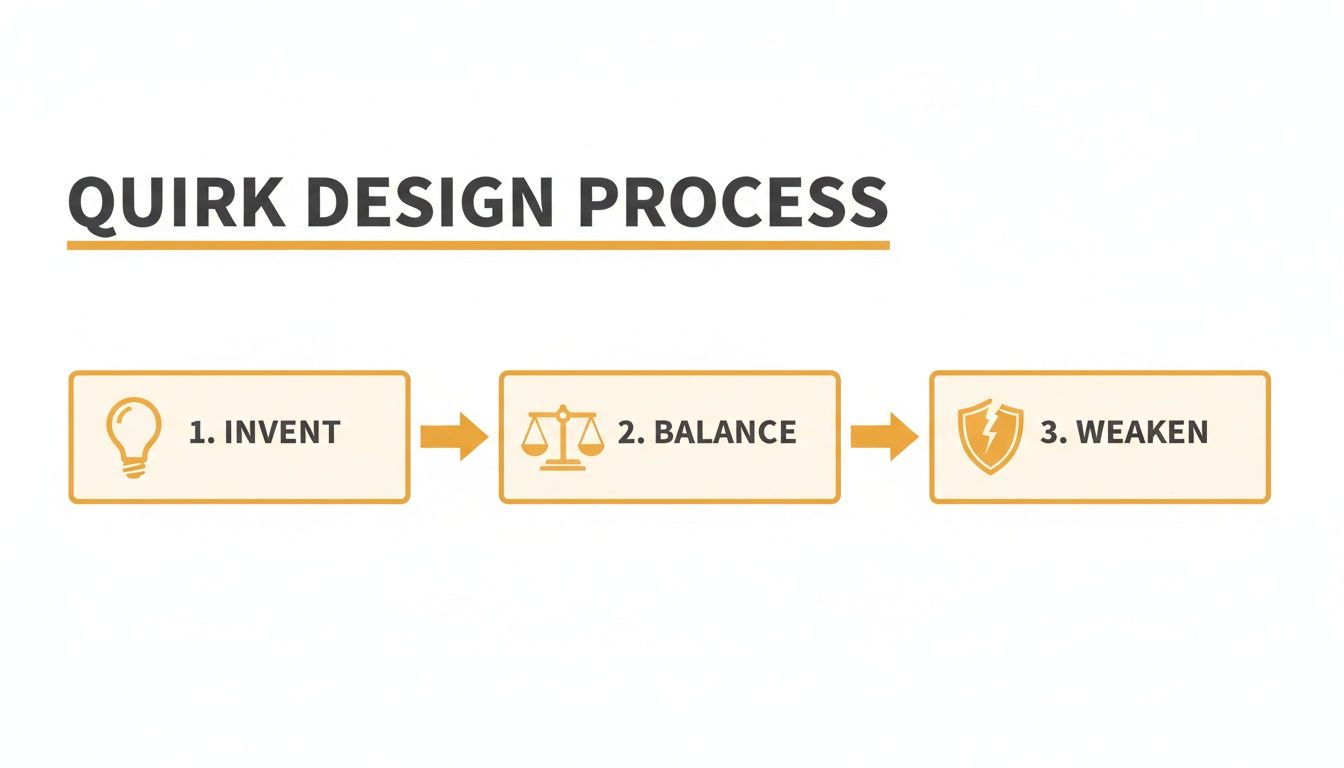
As you can see, just coming up with a power is only the beginning. It's the balancing act—the limitations and weaknesses—that makes a Quirk feel like it truly belongs in the MHA universe.
Maintaining Visual Consistency
Getting one amazing picture is easy. The real trick is getting ten amazing pictures of the exact same character in different poses and situations. The key to cracking this is consistency through repetition. I highly recommend creating a master text file where you save the exact phrasing for your OC’s most important features. Then, you can just copy and paste it into every new prompt.
Pro Tip: Keep a "character sheet" chunk of text that lists all the non-negotiable details. For example:
(spiky crimson hair, angular jaw, single scar over left eyebrow, piercing gold eyes, athletic build). Using parentheses often helps nudge the AI to pay closer attention to these critical features.
Don’t underestimate how much the MHA community loves high-quality, original content. Just look at the 7th JUMP Universal Illustration Contest—it received over 3,000 submissions, which series creator Kōhei Horikoshi actually reviewed himself. When the creator is that engaged with fan art, as detailed by CBR, you know there’s a massive and appreciative audience for well-thought-out OCs.
Building out a visual portfolio for your character is so rewarding. You can generate a whole series of images showing off their different emotions, a few action shots, or even what they wear on their day off. This collection doesn't just help you flesh out their personality; it also gives you awesome content to share with friends or post in fan communities. A great place to start is by getting a solid headshot. You can even create a custom anime portrait avatar to really lock in their facial features, giving you a perfect visual anchor for everything you create later on.
Choosing a Hero Name and Costume
In the world of My Hero Academia, your hero's name and costume are way more than just a cool look—they're their brand. A hero's name is their identity, a symbol that needs to stick in people's minds. Their costume? That’s their single most important piece of support gear. Together, they shape how everyone, from adoring fans to menacing villains, sees them.
When you're trying to land on the perfect name, pull inspiration from your character's Quirk, their personality, or even a pivotal moment from their backstory. Look at the patterns in the series itself. Some names are super literal, like Mina Ashido's "Pinky." Others are aspirational, like "Deku." And some are just undeniably cool, like "Hawks." The key is to find something that just feels right for your character.
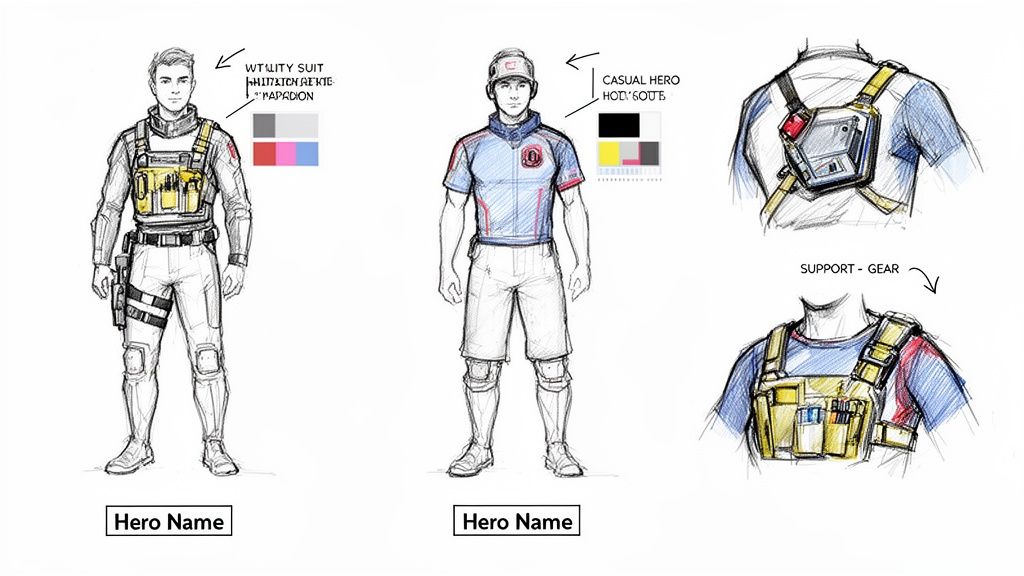
Functional Fashion Over Flash
Alright, let's talk costumes. While looking awesome is part of the job, functionality is king. A hero costume in MHA isn't just spandex; it's a piece of advanced tech designed to either amplify a Quirk or protect the user from its side effects. It’s the ultimate tool in their kit.
A great costume design tells a story about the hero's powers and how they fight. It should solve a problem for them, whether that's protecting them from their own abilities or giving them an edge in combat.
For instance, if your character’s Quirk generates scorching heat, their costume absolutely needs to be made from fire-retardant, heat-dissipating materials. Think about Bakugo's Grenadier Bracers—they aren't just for decoration. They let him store his explosive sweat to unleash massive, focused blasts he couldn't manage on his own. You need to think just as practically:
- Quirk Enhancement: Does your OC need special lenses for a projectile Quirk? Reinforced boots for super-speed?
- Drawback Mitigation: Maybe they need a built-in cooling system? Or braces to support their joints after a powerful transformation?
- Utility: What about the basics? Think communication gear, first-aid supplies, or capture weapons.
Of course, the visual aesthetic ties it all together. The high-quality animation from Studio Bones in the anime often surpasses even the manga's incredible art, setting a very high bar for character design that fans have come to expect. You can discover more insights about the anime's visual excellence and how it shapes fan expectations on Gamerant.
Prompting Your Hero's Look
Once you've got a solid concept in your head, the next step is translating it into a killer prompt for your chosen My Hero Academia OC maker. Get specific! Don't just say "a blue suit." Instead, try something like, "a form-fitting, navy-blue bodysuit made of reinforced carbon fiber with glowing yellow circuit patterns."
For even more design ideas and visual styles, you can browse this collection of superhero comic concepts. This level of detail is what helps the AI capture both the function and the flair of your hero's gear, creating an iconic look that feels like it belongs right in the MHA universe.
Common Questions About MHA OC Creation
Diving into the world of hero creation, you're bound to run into a few tricky questions. It happens to everyone. Whether you're struggling to make your character feel truly unique or just trying to wrangle an AI art generator into cooperating, these are the hurdles pretty much every creator faces.
Getting a handle on these common issues is what separates a rough concept from a fully-realized character you can’t wait to show off. Let's walk through some of the most frequent questions that pop up.
How Do I Make My OC Feel Original?
With a cast as massive and colorful as MHA's, it's natural to worry your character might just feel like a copy of someone else. But here's the secret: originality isn't about inventing a Quirk no one has ever dreamed of. It’s all about the unique combination of their personality, their history, and how they use their power. A good starting point is to avoid directly mirroring a canon character's core motivation or their exact power set.
A great trick is to give your OC a flaw or a point of view that clashes with the main cast. For example, what if you created a hero who is deeply pragmatic, almost to the point of being cynical? Exploring how that personality shapes their idea of heroism—especially in a world full of wide-eyed idealists—instantly carves out an original and compelling space for them. Your character's personal story is your best tool for making them stand out.
The most original characters often feel like a direct response to the world they live in. Think about what your OC loves, hates, or fears about hero society, and let that be the engine for their story.
What Are Common Mistakes to Avoid When Designing a Quirk?
The single biggest trap is creating a Quirk that's way too powerful and has no meaningful drawbacks. A compelling power needs limits, rules, and consequences. A hero who can solve any problem without breaking a sweat is boring. A hero who has to push through pain, think on their feet, and get creative? That’s someone we want to root for.
Always ask yourself: what’s the cost of using this power?
- Does it cause immense physical strain or leave them totally exhausted?
- Is there a hard time limit on how long it can be used?
- Does it need a specific environmental condition to even activate?
Adding these kinds of weaknesses doesn't just make your character more balanced and realistic within the My Hero Academia universe. More importantly, it creates built-in conflict that makes their personal journey far more interesting to follow.
How Can I Get Consistent AI Images of My Character?
Consistency is the name of the game when you're using any kind of My Hero Academia OC maker, and it all comes down to how specific your prompts are. To get a consistent look across multiple images, you have to use the exact same key descriptive phrases for your OC's core features every single time.
So, instead of just writing "red hair," you should always use the full, specific phrase like "spiky, shoulder-length crimson hair." I highly recommend creating a "character key" for yourself in a separate doc—just a block of text with all their non-negotiable features that you can copy and paste into every prompt. If your tool allows it, using a consistent seed number can also work wonders for locking in your character’s appearance.
Ready to bring your hero to life with stunning, consistent visuals? Tooncraft is the ultimate AI tool for turning your detailed character concepts into high-quality anime art that nails the MHA style. Create your OC today at https://tooncraft.ai!